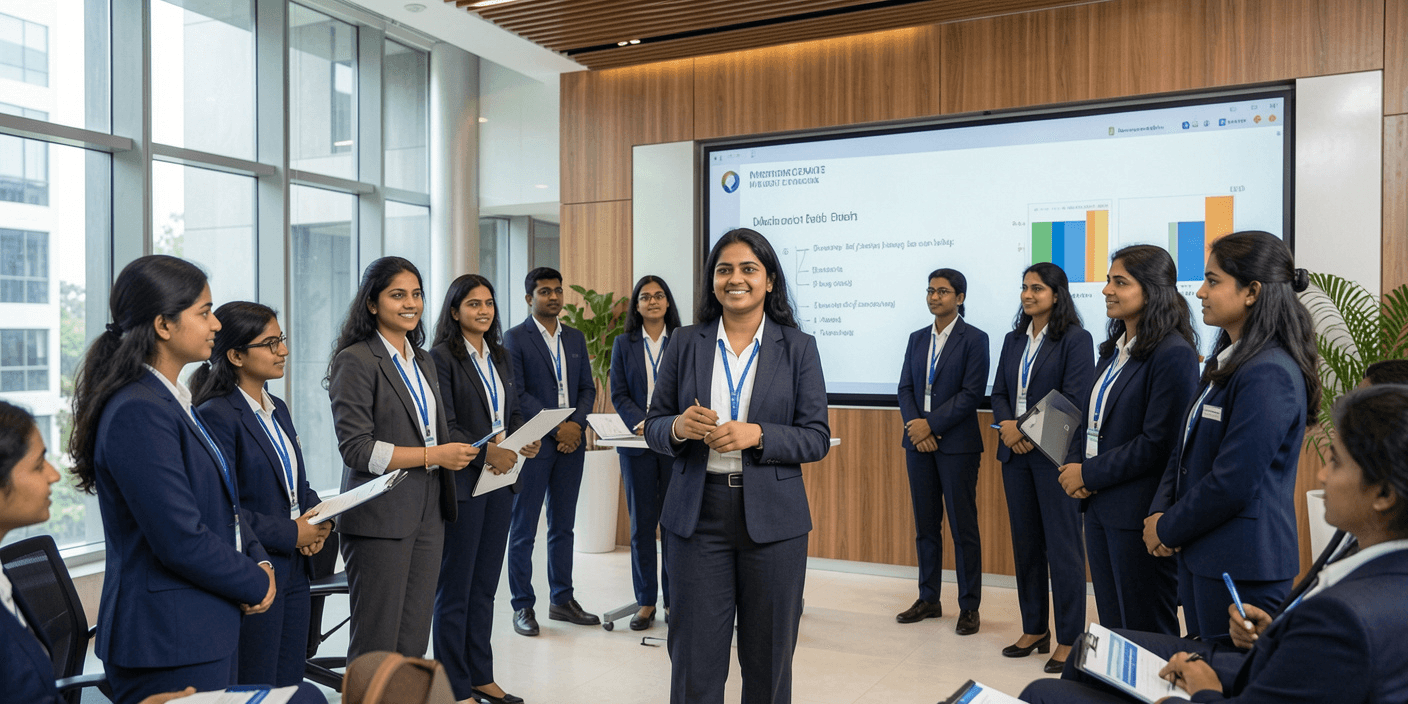
Doctoral candidates here are usually treated as paid researchers rather than students paying to study. Anyone weighing a PhD in Germany for Indian students plan should understand upfront that this isn't a scaled-down master's degree; it runs on a different model, with its own funding routes, timelines, and expectations.
How a German PhD Actually Works
Germany runs two broad tracks for doctoral study, and picking the wrong one early on causes more confusion than almost anything else in the process. The first is the individual or traditional route, where a candidate finds a professor willing to supervise them and largely designs their own research plan with minimal coursework.
The second is the structured programme, often run through a graduate school or a Max Planck Institute, which looks closer to what Indian applicants expect: cohorts, seminars, defined milestones, and a supervisory committee rather than a single advisor.
Both paths generally take three to four years, sometimes stretching to five depending on the field. Public universities charge no tuition for either track, though a small semester fee still applies almost everywhere.
What Fully Funded Means
Here's where things differ sharply from applying for a master's. A fully funded PhD Germany position typically covers a monthly stipend, health insurance, and sometimes a contribution toward conference travel, and this isn't a rare exception, it's closer to the norm for doctoral candidates in the sciences and engineering. Funding generally comes from one of a few sources:
- DAAD scholarships: covers Indian and other international candidates through dedicated doctoral funding lines, often for three years with possible extension
- DFG-funded research projects: tied to Germany's main research funding body, usually attached to a specific professor's grant
- Max Planck and Helmholtz institutes: run their own structured doctoral programmes with built-in funding for most accepted candidates
- University-employed research positions: where the doctoral candidate is hired as a part-time academic staff member, drawing a salary rather than a stipend
Candidates who land a university employment contract, rather than a scholarship, are often taxed and receive social security benefits, which is a meaningful distinction Indian applicants don't always know to ask about during interviews.
PhD Stipend in Germany: The Numbers
A typical PhD stipend Germany range sits between €1,300 and €2,000 a month, though this varies quite a bit depending on whether funding comes through a scholarship or an employment contract. DAAD stipends usually land around €1,300 to €1,400 monthly. Employment-based positions, common at technical universities and Max Planck institutes, tend to pay closer to €2,000 to €2,300 gross, though taxes and social contributions reduce the take-home amount noticeably.
Munich, Stuttgart, and Frankfurt cost more to live in than smaller research towns like Göttingen or Jena, so the same stipend stretches differently depending on location. Most doctoral candidates find that a mid-range stipend covers rent, food, and insurance comfortably in a smaller city, while it's tighter in the bigger research hubs. Before accepting an offer, it's worth asking the supervisor directly what the actual PhD stipend Germany amount will be after tax and insurance deductions, since gross figures quoted in job postings can be misleading.
Universities and Institutes Worth Targeting
Unlike master's admissions, where the university brand carries real weight, doctoral applicants are better off thinking in terms of research groups rather than institutional rankings. That said, a few names come up constantly for Indian applicants across disciplines:
- Max Planck Institutes: spread across dozens of specialised centres, widely regarded for output in physics, chemistry, and biology
- Technical University of Munich: strong in engineering, computer science, and data-driven research
- Heidelberg University: one of Germany's oldest and most research-intensive universities, particularly in life sciences and physics
- Humboldt University of Berlin: draws candidates in social sciences, humanities, and economics
- RWTH Aachen: a common pick for mechanical, electrical, and materials engineering doctorates
Karlsruhe Institute of Technology: active in energy systems and information technology research
Helmholtz Association centres also deserve a mention, since they run large-scale structured programmes with guaranteed funding for most admitted candidates, which takes some of the financial uncertainty out of the equation. Candidates researching a fully funded PhD Germany position often find that these larger institutes make the search easier since funding is built into the programme rather than dependent on a single professor's grant running out mid-way through the doctorate.
Eligibility and Academic Requirements
Meeting the basic bar for a PhD in Germany application starts with a recognised master's degree in a relevant field, generally with strong grades, since doctoral admissions here lean heavily on academic performance and research fit rather than standardised testing. A few other things matter just as much:
- A well-defined research proposal, especially for the individual route, showing you've thought through the question you want to investigate
- Publications or a thesis from your master's programme that demonstrates independent research capability
- English proficiency, typically IELTS 6.5 or TOEFL 90, unless your prior degree was taught in English
- German language skills are rarely mandatory for the research itself, though basic proficiency helps xwith daily life and university administration
- Two academic references, ideally from professors who can speak to your research ability rather than just coursework performance
Unlike undergraduate or master's admissions, there's no single centralised deadline. Structured programmes often run on fixed application windows, sometimes twice a year, while individual PhD positions get advertised whenever a professor has funding and a vacancy, which means candidates need to track openings continuously rather than waiting for one admission cycle.
This step trips up more Indian applicants than almost anything else in the process. For the individual route, the standard approach is identifying professors whose published research overlaps with your interests, then reaching out directly with a tailored proposal rather than a generic inquiry. A message that clearly references a professor's recent papers and explains how your background connects to their work gets noticed far more often than a template email sent to twenty names at once.
Job portals worth checking regularly include Academic Positions, ResearchGate job listings, and individual university career pages, since funded vacancies get posted there well before they reach broader search engines. Patience matters here; positions can take weeks to get a response, and following up once after a reasonable gap is generally acceptable rather than pushy.
How Does the Application Process Take Place?
Once a supervisor or programme confirms interest, the paperwork side kicks in. This usually includes:
- Certified degree certificates
- A detailed CV highlighting research experience
- A motivation letter or Statement of Purpose
- Formal admission through the doctoral office with supervisor's agreement
Other common documents that are needed include proof of funding, health insurance, and accommodation. Although sometimes, scholarship holders often skip the blocked account since their funding already covers the financial proof needed. Processing timelines vary by consulate, so starting visa paperwork as soon as funding is confirmed tends to save weeks later on.
Life After the PhD
Germany's 18-month post-study visa applies to doctoral graduates too, giving ample time to look for postdoctoral positions, industry research roles, or academic openings without rushing the decision. Industry demand for PhD holders runs particularly high in engineering, pharmaceuticals, and data-driven fields, where German companies value the deep specialisation a doctorate represents. Academic paths remain viable as well, especially for candidates who publish consistently during their doctoral years and build a visible research profile within their field.
Frequently Asked Questions
Is a PhD in Germany really free for Indian students?
Tuition itself is free or nearly free at public universities, though a small semester fee applies. Most doctoral candidates also receive a stipend or salary, so the financial picture works quite differently from paying to study.
How much is a typical PhD stipend in Germany?
Stipends generally range from €1,300 to €2,300 a month depending on whether the funding comes through a scholarship or a university employment contract.
Do I need a master's degree before applying?
Yes, almost all doctoral programmes require a completed master's degree in a relevant field before admission.
Is German language proficiency required?
Not usually for the research itself, since most academic work happens in English, though basic German helps with day-to-day administration and life outside the university.
How long does a German PhD take?
Most candidates finish in three to four years, though this can extend to five depending on the research area and funding structure.
Final Thoughts
A German doctorate offers something increasingly rare: genuine funding, minimal tuition, and research environments that carry real global weight. For Indian applicants exploring a PhD in Germany for Indian students route, the groundwork lies less in filling out forms and more in identifying the right supervisor or programme early. Get that part right, and the funding, the stipend, and the rest of the paperwork tend to follow a fairly predictable path.